
Consultants span a vast array of industries, disciplines, and skillsets, so picking a lane can feel risky and nerve-wracking. What if clients don’t think you’re qualified enough? What if you’re not happy in your niche?
This quick guide offers a peek at what the most popular types of consulting look like, who they serve, and the common risks associated with each. Pick one, give it a test run, and then protect your new profession with consultant insurance.
Understanding the Two Main Categories of Consultants
While there are numerous types of niches to choose from, consultants typically fall into one of two categories: generalists or specialists.
- Generalist: These consultants have broad expertise that they apply to a variety of industries. They may operate in more ambiguous work environments or across multiple departments within an organization, rather than focusing on a single one.
- Examples: Corporate strategy consultants, project management consultants, and operations consultants
- Specialist: Consultants who have deep knowledge in a specific domain (e.g., lactation or human resources [HR] platforms) are considered specialists. They typically work with individual teams and consult on technical matters.
- Examples: Lactation consultants, interior design consultants, and education consultants
How to Pick Your Lane in 5 Minutes
As you browse the different kinds of consulting careers below, follow these tips to narrow down your niche (and avoid the pressure that often comes with making a big decision).
- Determine your strengths: One of the best ways to choose the right consulting path for you is to match it to your strengths. This could be strategy, tech, people skills, numbers, creativity, etc.
- Consider your ideal client type: Who do you want to work with? Consultants often work with startups, small to mid-sized businesses, nonprofit organizations, or even the public sector.
- Understand the barriers to entry: This includes everything from the types of credentials you need to be taken seriously in that niche to mastery of specific software relevant to your clientele.
- Learn the risks: Every consulting path comes with its own set of risks to be aware of so you can take preventative measures. Common risks include professional advice errors, cyber breaches, intellectual property (IP) infringement, or on-site incidents.
- Choose a niche to test: You don’t have to commit to a particular path right away. Instead, choose one that feels right and test it for 30 days to see what you think. Does it seem like a good fit? Can you see yourself committing to this niche long-term? If not, give yourself grace, return to your shortlist, and try again.
Unpacking 8 Common Consulting Paths
While new niches are constantly popping up, we’ve compiled a list of the eight most common types of consulting businesses today. Take a look at each overview to get a feel for which path is right for you.
1. Management and Strategy Consulting

Management and strategy consultants help businesses and organizations make high-level decisions about growth, restructuring, competitiveness, and long-term goals.
|
Clients
|
|
|
Key Skills
|
|
|
Credentials Needed
|
|
|
Generalist or
|
|
|
Example Titles
|
|
|
Risks
|
|
|
Coverage Needed
|
Learn more about insurance for management consultants.
2. Business Operations and Process Improvement Consulting
Business consultants in this niche help clients improve workflows, efficiency, supply chains, and/or operational performance within their business.
|
Clients
|
|
|
Key Skills
|
|
|
Credentials Needed
|
|
|
Generalist or
|
|
|
Example Titles
|
|
|
Risks
|
|
|
Coverage Needed
|
Learn more about business consultant insurance and some of the biggest risks business consultants face.
3. Lactation Consulting

Lactation consultants are specialized healthcare professionals who help parents and infants with breastfeeding. They provide instruction on latching, feeding plans, and pumping, as well as offer emotional support through the parents’ breastfeeding journey.
|
Clients
|
|
|
Key Skills
|
|
|
Generalist or
|
|
|
Example Titles
|
|
|
Risks
|
|
|
Coverage Needed
|
Learn more about insurance for lactation consultants.
4. Marketing and Brand Consulting
Consultants working in the brand and marketing space help companies define and establish their brand identity, marketing strategy, and positioning in the market. They also often advise clients on how to improve their digital presence and boost customer engagement.
|
Clients
|
|
|
Key Skills
|
|
|
Credentials Needed
|
|
|
Generalist
|
|
|
Example Titles
|
|
|
Risks
|
|
|
Coverage Needed
|
Learn more about insurance for marketing consultants.
5. Interior Design Consulting

These consultants help their clients plan and optimize interior spaces for function, usability, and aesthetics. They often create design concepts, select furnishings, manage vendor relationships, and may oversee installation.
|
Clients
|
|
|
Key Skills
|
|
|
Credentials Needed
|
|
|
Generalist
|
|
|
Example Titles
|
|
|
Risks
|
|
|
Coverage Needed
|
Learn more about insurance for interior design consultants and the reasons why interior designers need liability coverage.
6. Human Resources (HR) and People Consulting
HR and people consultants have strong interpersonal skills and support their clients with strategy, organizational design, compensation planning, leadership development, and change management.
|
Clients
|
|
|
Key Skills
|
|
|
Credentials Needed
|
|
|
Generalist
|
|
|
Example Titles
|
|
|
Risks
|
|
|
Coverage Needed
|
Learn more about insurance for HR consultants and some of the most common claims HR consultants face.
7. Education Consulting

The world of education is constantly evolving, but education consultants are there to help clients improve learning outcomes, design curricula, teaching methods, and school policies. They may work with schools and other learning institutions or with individual families and students.
|
Clients
|
|
|
Key Skills
|
|
|
Credentials Needed
|
|
|
Generalist or Specialist?
|
|
|
Example Titles
|
|
|
Risks
|
|
|
Coverage Needed
|
Learn more about insurance for education consultants.
8. IT and Technology

IT and tech consultants are specialists who advise their clients on choosing, implementing, and integrating various tech systems. This includes enterprise resource planning (ERP), customer relationship management (CRM), cloud platforms, and AI tools.
|
Clients
|
|
|
Key Skills
|
|
|
Credentials Needed
|
|
|
Generalist
|
|
|
Example Titles
|
|
|
Risks
|
|
|
Coverage Needed
|
Learn more about insurance for IT consultants.
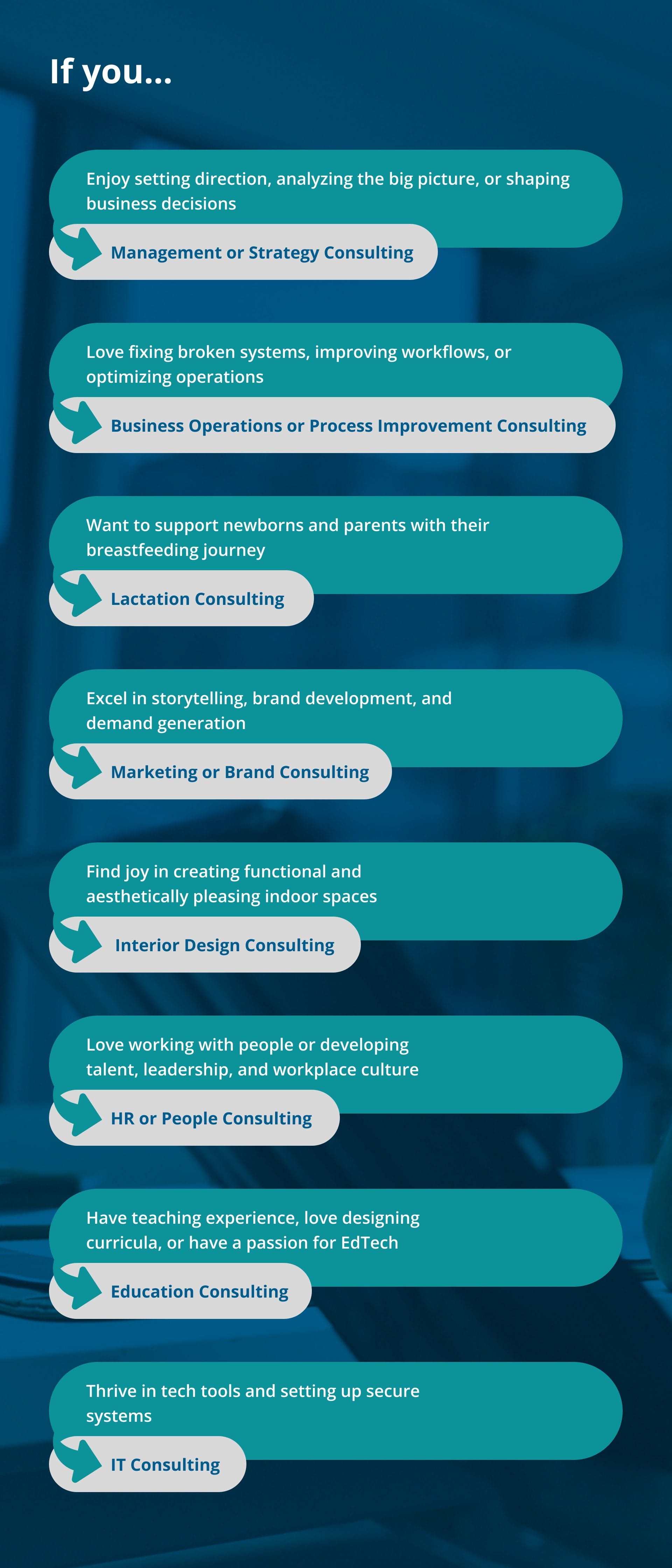
Match Yourself to the Perfect Consulting Path
Use our decision tree to uncover which niches best align with your career goals and interests!
Next Steps
Now that you know what some of the most common, in-demand consulting paths are, it’s time for a test run. Choose the path that best fits your interests, goals, and skillset, outline your proposal, and see how it feels.
Once you’ve found the right path, protect your work with the right policy. With Insurance Canopy, you can get consultant insurance for as low as $21 a month. This includes the following essential coverages:
- Professional liability
- General liability
- Free and unlimited additional insureds
- Plus, easily expand your coverage with add-ons like:
- Cyber liability
- Fidelity bonds
- Higher limits
Attract clients, protect your business, and start strong with consultant insurance from Insurance Canopy!
FAQs About Types of Consultants & Choosing the Right Niche
Which Consulting Niche Is the Most Profitable for Beginners?
The following consulting paths are in high demand, have relatively low barriers to entry, and clients tend to pay competitive rates early on:
- Marketing/brand consulting: These consultants are in high demand among small companies and startups looking to attract customers and establish brand loyalty. The specialized skills you need to succeed in this space (ads, content strategy, SEO, etc.) can be learned relatively quickly without a formal education.
- Starting rate: $50–$150/hr.
- Operations and process improvement consulting: This path requires skills that can be learned relatively quickly, like process mapping and standard operating procedure (SOP) creation. Businesses are always looking for ways to increase efficiency while reducing costs.
- Starting rate: $60–$120/hr.
- HR and people consulting: If you have strong interpersonal skills and consider yourself a people person, HR consulting is a great, beginner-friendly choice. Small businesses, in particular, often need help with complying with regulations, hiring, and onboarding.
- Starting rate: $50–$120/hr.
Do I Need a Degree to Become a Consultant?
Not necessarily. Some niches require at least a bachelor’s degree, if not a master’s, such as education and interior design consultants. For others, like lactation consultants, relevant consulting certifications may suffice.
What’s the Biggest Mistake New Consultants Make When Choosing a Path?
Many new consultants are hesitant to specialize in a particular area because they worry they won’t enjoy it or won’t be good at it, so they offer generic services. They may think they can attract more clients this way, but the truth is that clients appreciate specific skillsets and expertise.
While generalist types of consulting are still a valid option, you should never be afraid to hone in on what you’re really good at or passionate about.


