
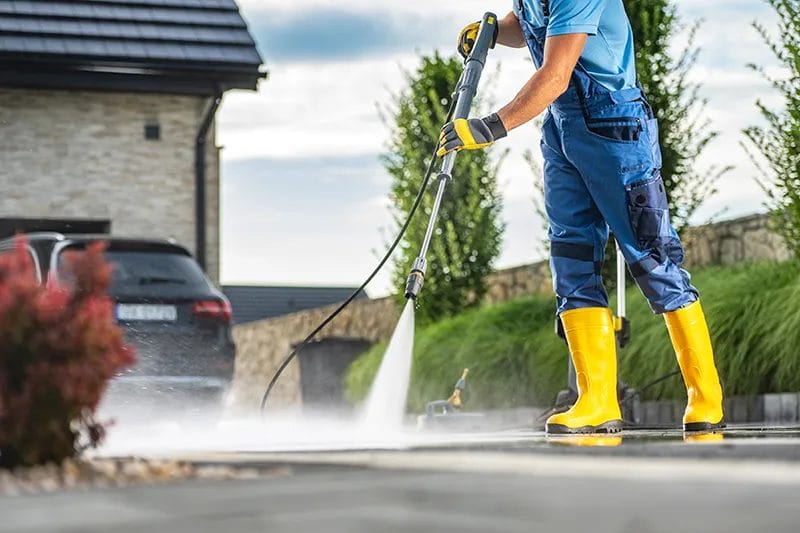
Starting a pressure washing business is a practical way to turn local demand into steady work. But first, you must understand your market, choose your services, handle the legal setup, buy equipment, and get insurance.
Sounds like a lot? Let’s break it down a step at a time. This guide explains how to start your pressure washing business with more confidence, fewer surprises, and a clear path to your first paid jobs.
TL;DR — How to Start a Pressure Washing Business
You can start a pressure washing business for around $2,000 to $25,000, depending on your setup, by following these seven steps:
- Research your local market
- Choose and price your services
- Write a simple business plan
- Register your business and get required licenses or permits
- Get pressure washing business insurance
- Buy the equipment, tools, and software you need
- Market your business to local customers
Start small, spray smart, and get a quote for coverage today.
7 Steps to Starting a Pressure Washing Business
Taking care of the legal and operational basics first helps you build a strong foundation for your business. Follow the steps below to set up your pressure washing business on a budget that makes sense while complying with local regulations.

1. Research Your Local Market
A little bit of market research goes a long way toward understanding who your customers are, what services they need, and how to compete with other local cleaning businesses.
Consider your area, then look at competitor websites and their customer reviews to determine:
- Job Type: Whether your area has more residential or commercial opportunities
- Services: What services clients need most, such as house washing or pool deck cleaning
- Pricing: How much competitors charge for the same services
- Values: What customers value most, like affordability, speed, or quality of work
With this information, you can identify gaps in the market, determine what equipment you’ll need, and focus on smarter marketing.
2. Choose & Price Your Services
List the services you can safely perform and confidently price, including beginner-friendly tasks, like washing driveways, sidewalks, patios, fences, and vinyl siding. Use your list to build service packages for your customers to choose from.
Most pressure washing businesses price their services between $0.15 and $0.75 per square foot based on the surface type, job difficulty, and local rates. Adding a flat trip charge or supply expenses helps improve your profit margin and cover overhead costs.
For example: Driveway cleaning = $0.25 x 800 sq ft + $120 trip charge + $65 supplies = $385
3. Write a Pressure Washing Business Plan
Your business plan is a roadmap for how you plan to operate and grow your company. It should be flexible (and realistic enough) to feel doable. The good news is you’ve already done some of the work with steps one and two.
Your pressure washer business plan should include:
- Executive summary (an overview of your business, operations, and goals)
- Market research (your service area, target clients, and their needs)
- Services and prices (your service packages and pricing strategy)
- Competitive analysis (what makes you unique compared to your competitors)
- Marketing strategy (how you plan to attract clients)
- Financial projections (startup costs, cash flow, and revenue goals)
If you need a small business loan, having a business plan helps you secure funding for equipment, such as a pressure washer trailer. See our guide to creating a small business plan for a free template plus more tips.
4. Set Up Your Business Legally
When starting a pressure washing business, you are legally required to register it and obtain the necessary licenses and permits from your state or local municipality.
Follow these five steps to get the right legal setup:
- Choose a business structure: Many pressure washers choose to operate as a limited liability company (LLC) to help separate personal and business assets
- Register your business: After picking a name for your business, register it with your state and county to make it official and operate legally
- Apply for an EIN: Get a free employer identification number (EIN) from the IRS to open business accounts and file taxes correctly
- Open a business bank account: Keep personal and business finances separate to make bookkeeping, taxes, and future loan applications easier
- Research licenses and permits: Ask your local county clerk’s office or Chamber of Commerce which licenses or permits you need, which we’ll cover in more detail below
Consider consulting with a tax advisor, legal professional, or small business counselor to help you choose the right legal structure and meet local requirements.
5. Get Business Insurance Before Your First Paid Job
Pressure washing is a risky job, which is why you need liability insurance to protect against costly accidents, like damaging someone’s property.
If you accidentally crack a customer’s vinyl siding or they slip on spilled chemicals, pressure washing insurance coverage may help pay repair costs, medical bills, or legal fees. Plus, homeowners associations (HOAs) and local businesses often require proof of insurance before they’ll hire you.
Insurance is a necessity. Pressure washing doesn't have the margins to absorb the damage it can cause.
David Klintworth, CEO, Duck Power Wash LLC
Insurance Canopy helps pressure washers get tailored business insurance for as little as $39 a month, giving you the coverage you need to operate safely and protect your investment.
Pro tip: Want to make sure you’re meeting all client and state insurance requirements? We created a pressure washing insurance guide to help you know what coverage to get.
6. Buy Pressure Washing Equipment & Business Tools
Your equipment is one of your biggest investments, so choose tools that fit your services, are in good condition, and can handle repeat jobs. Larger purchases, like a cleaning vehicle, pressure washer trailer, or water tanks, can wait until you have a steady stream of clients.
You can build your mobile pressure washing setup on a budget with:
- Gas-powered pressure washer
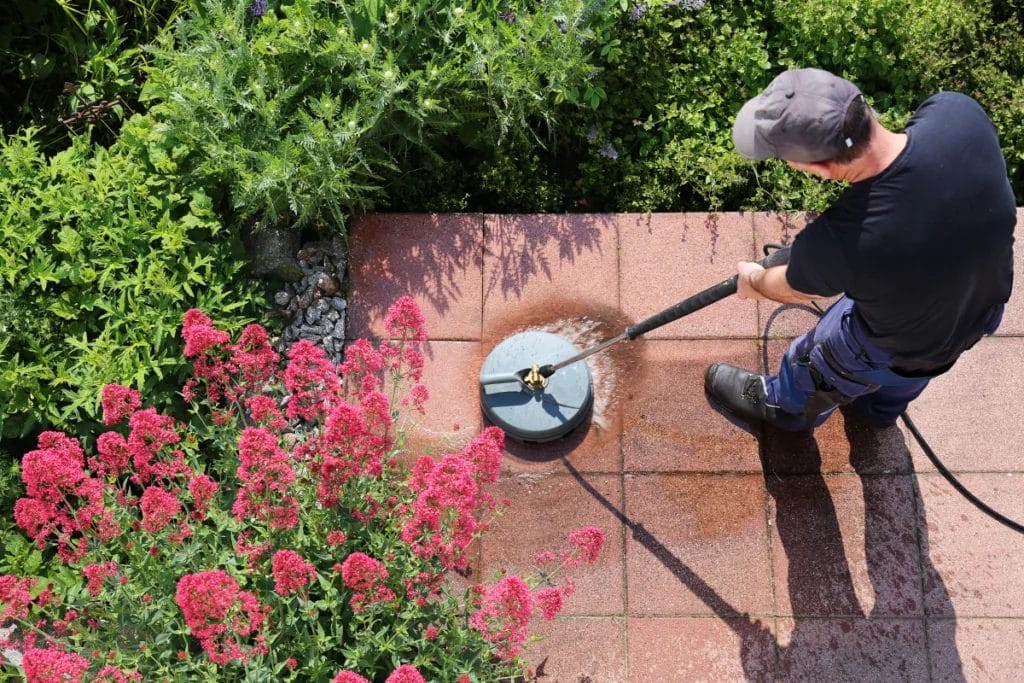
- Rotating surface cleaner
- Spray gun and extension wand
- Downstream injector for mixing chemicals
- 100 ft high-pressure hose
- Water supply hose
- Hose reels
- Cleaning chemicals designed for pressure cleaning
- Safety gear, including gloves, goggles, and waterproof boots
- Scheduling, bookkeeping, and invoicing software
Many pressure washing business owners add tools and equipment insurance to their policy because gear is one of the most significant startup costs. If your pressure washer, hoses, or other gear gets stolen or damaged, this coverage can help pay to repair or replace it so you can keep working.
7. Market Your Business & Book Locally
Word-of-mouth marketing is the strongest way for pressure washers to build local visibility and client trust. Try these marketing ideas to help you turn early interest into booked gigs:
- Build your Google Business Profile: This is the best way for local customers to find and contact your business, plus leave reviews
- Join local Facebook groups: Neighborhood, HOA, and other local Facebook groups are great places to post about your services
- Establish a website: A simple website looks more professional and establishes a chance for future growth
- Print marketing materials: Yard signs, door hangers, and business cards are a must for spreading the word about your business
- Get a business email: Having a branded email address is free, and it looks more professional when clients reach out for quotes
- Ask for reviews: Customer reviews help strengthen your trust and authority
- Try networking: Connecting with local businesses, real estate agents, and property managers is a popular way for cleaning businesses to find steady work
How Much Does It Cost to Start a Pressure Washing Business?
Starting a pressure washing business can cost around $5,000 to $25,000, depending on your mobile setup and where you live. A lean starter setup may cost closer to $2,000 if you use basic residential equipment and a vehicle you already own.
For a broader look at startup expenses, see our guide to cleaning business startup costs. Here’s a quick look at what pressure washing startup costs on a budget may include:
| Cost | Estimated Costs | What’s Included |
|---|---|---|
|
Business registration |
$75 – $400 |
Business registration, LLC paperwork, and EIN number |
|
Licenses and permits |
$50 – $500 |
Business license, contractor license, environmental permits, sales tax permits (if required) |
|
Business insurance |
Starts at $39/month or $425/year |
General liability, tools and equipment, commercial auto, workers comp if applicable |
|
Equipment |
$1,000 – $5,000 |
Pressure washer, surface cleaner, hoses, nozzles, wand, cleaning solutions, safety gear |
|
Mobile setup |
$20,000+ |
Vehicle, trailer, and water tanks (if needed) |
|
Marketing tools |
$0 – $100 |
Website, Google Business Profile, flyers, and signs |
What Licenses, Permits, & Insurance Do Pressure Washing Businesses Need?
Pressure washing businesses need a mix of business licenses, permits, and insurance to legally operate and meet requirements. What you need depends on where you work, your services, and local regulations for water runoff, chemicals, and taxable services.
| Requirement | What It Covers | When It Typically Applies |
|---|---|---|
|
General business license |
Operating legally in your service area |
Most cities and counties require a business license for pressure washing before you take on jobs |
|
Contractor’s license |
Specialty work, like paint stripping or deck sealing |
Some states, for specialty services, not typical residential washing |
|
Environmental & wastewater permit |
Managing runoff and wastewater disposal under the Clean Water Act |
Common for mobile operations; check your state’s environmental agency |
|
Sales tax permit |
Collecting and remitting tax on taxable services |
States that treat pressure washing as a taxable maintenance service |
Certificate of Insurance (COI)
Pressure washing businesses often need a Certificate of Insurance (COI) showing proof of general liability coverage to meet client requirements. With Insurance Canopy, you get an instant COI with your policy.
You can also add other coverages that your state or customers might require, such as:
- Workers compensation: Required by most states to help pay for employee injuries or illnesses on the job
- Commercial auto: Helps cover the cost of accidents that might happen while driving a work vehicle
- Janitorial bonds: Larger clients like HOAs and commercial businesses might require a bond to help protect against employee theft
Pro tip: Before buying pressure washing business insurance, check what services are excluded (not covered) to ensure you have the right protection.
Start Small, Set Up Right, & Protect Your Business
Starting a pressure washing business doesn’t require a big budget or a massive crew. Taking the right steps helps you start small, invest smart, and avoid missing requirements. Before your first gig, make sure your business has coverage that fits the work you plan to do.
FAQs About How To Start a Pressure Washing Business
How Profitable Is a Pressure Washing Business?
Pressure washing businesses can be profitable when owners price jobs well, control expenses, and build steady local demand. Independent market research reports an average industry profit margin of 6.8%, with some solo operators earning around $65,000 in net profit after taxes.
U.S. pressure washing businesses average about $250,000 in annual revenue, though actual earnings depend on location, services, equipment costs, and whether you have employees.
Do I Need a License to Start a Pressure Washing Business?
Yes, you typically need a general business license to start a pressure washing business. Verify your local business licensing rules with your county clerk’s office or Chamber of Commerce. Some states require pressure washers to have a contractor license and environmental permits, depending on the services they provide.
Do I Need Pressure Washing Business Insurance as a Solo Operator?
Yes, solo operators should have pressure washing business insurance before taking paid jobs. Even if you work alone, you can still be responsible for property damage, customer injuries, overspray, or damaged surfaces. Insurance is designed to help protect your business from covered claims and may be required by clients, HOAs, or commercial property owners.
When Should I Get Pressure Washing Business Insurance?
You should get pressure washing business insurance before working on a customer’s property. High-pressure equipment, wet surfaces, and cleaning chemicals can lead to property damage or bodily injury claims, making general liability coverage essential. If you hire employees, you may also need workers compensation insurance before they begin work.
What Equipment Do I Need for My First Pressure Washing Jobs?
For your first pressure washing jobs, you need a way to transport your equipment, plus basic tools, including:
- A pressure washer
- Surface cleaner
- Spray gun and wand
- Downstream injector
- High-pressure hose
- Water supply hose
- Cleaning chemicals
- Safety gear
Business tools like scheduling, invoicing, and bookkeeping software can also help as you grow.