
The words “bonded” and “insured” are often heard together, but they don’t mean the same thing. In short, liability insurance helps protect your cleaning business against third-party claims you might otherwise have to pay out-of-pocket, and bonds protect your clients from theft by your employees. Depending on the jobs you take, clients may require one or both.
Here’s what each does, how they differ, and how to determine if you need bonding and insurance for your cleaning company.
Bond vs. Insurance: What's the Difference?
It’s a common misconception that bonds protect your cleaning business the way insurance does. Bonds and cleaning business insurance work hand-in-hand, but serve very different purposes: bonds protect your client, and insurance protects you.
General liability insurance is your business’s safety net in case of third-party bodily injury and property damage claims. For example, if your client slips on a freshly mopped floor and breaks their hip, general liability can help cover that client’s expensive medical bills. If you accidentally use the wrong cleaning product, and it strips a client’s hardwood floors, general liability may pay for the cost of refinishing the floors.
While insurance protects you, bonds are meant to safeguard your clients, which is why they’re a common contract requirement. If your employee steals a client’s watch, a janitorial bond can reimburse your client for it. Bonds help keep your client relationships nice and tidy.
| Janitorial Bond | Cleaning Business Insurance | |
|---|---|---|
|
Definition |
A financial guarantee that reimburses your client if an employee commits theft |
A policy that helps protect your business from covered claims, lawsuits, and unexpected losses |
|
What it covers |
Employee theft and other covered dishonest acts |
Third-party injuries, property damage, and other covered business risks |
|
Who it protects |
Your client |
Your business |
|
When it’s required |
Often required by clients, property managers, contracts, or service platforms |
Not usually legally required, but strongly recommended to protect your business, and also frequently a contract requirement |
|
How much it costs |
Get bonded starting at $131 with Insurance Canopy |
You can insure your cleaning business for as low as $39 a month |
|
Who files claims |
Your client files a claim against the bond |
Your business or your client files a claim with the insurance company for a covered loss |
|
How long it’s good for |
Usually issued for a specific bond term or contract period |
Typically renewed annually and updated as your business grows |
The bottom line? Insurance and bonding serve different purposes, so one doesn’t replace the other.
Why Cleaning Businesses Need Insurance
It’s smart practice for any business, regardless of size, to carry general liability insurance. Even solo cleaners with just a couple of jobs need insurance, since one broken heirloom or slip can cost thousands out of pocket.
General liability insurance is designed to help cleaning businesses:
- Meet state or local requirements: Some municipalities require cleaning businesses to carry liability insurance. Be sure to check your local regulations.
- Protect against third-party injuries: Slip-and-fall accidents are some of the most common cleaning insurance claims cleaners face. Considering that most slip-and-fall settlements land between $10,000 and $50,000 and often exceed that in more serious injuries, it’s not an exaggeration to say that one accident can devastate a cleaning business.
- Pay for client property damage: For instance, if you use the wrong cleaning solution on a client’s antique armoire, and they demand you pay to refinish it, or your mop handle cracks the oven door in a client’s kitchen, general liability coverage can help pay for those repairs.
- Protect against legal expenses: Cleaning business insurance can help protect you if you’re found liable for third-party injuries or property damage. It can also help pay for attorney fees and court costs, so you’re not on your own defending your business.
- Qualify for more jobs: It’s common for clients to request proof that you have liability insurance before they’ll hire you — they’ll typically ask to see your Certificate of Insurance (COI). It’s their way of making sure they’re covered in case of a sticky situation, and it’s a signal to clients that you’re professional and dependable.
Why Cleaning Businesses Need a Bond
Clients put trust in cleaning businesses that often operate unsupervised on their property, have access to sensitive areas, and keep keys to job sites. A janitorial bond acts as a guarantee — it reassures your customer that they may be reimbursed for losses due to employee theft.
A janitorial bond works differently from insurance. If a client files a valid claim, the bonding company pays the client first. Your business is then responsible for repaying the bonding company for the amount it paid on your behalf.
Janitorial bonds are another signal to customers that you operate a professional, honest business. When you purchase a bond, you’ll receive a bond confirmation and bond number, which you can send to your clients, much like you would a COI.
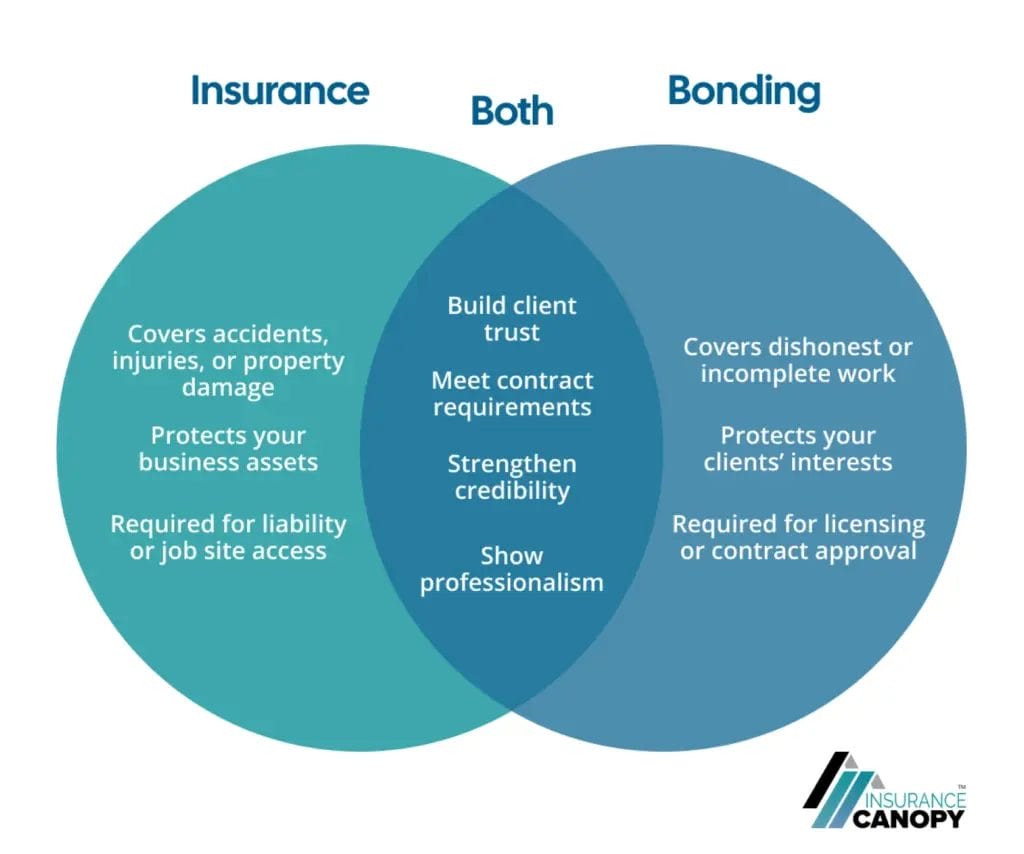
A bond and insurance aren’t competing products — they work together to protect different parts of your business. Understanding the difference helps you choose the right coverage with confidence.
Pro Tip: Starting a new business? Check out our Small Cleaning Business Insurance Guide (+ Free Checklist).
What Types of Cleaning Businesses Need Insurance and Bonding?
No matter your niche, insurance and bonding for your small cleaning business are a must to protect what you’ve built and inspire client confidence. Here’s how insurance helps protect specific types of cleaning businesses:
- Carpet cleaning: Can help cover accidental carpet stains or damage caused by your equipment
- House cleaning: Built to cover accidents like broken items or damage from cleaning products
- Janitorial services: Can cover wet-floor injuries, equipment accidents, or property damage
- Maid services: Designed to cover accidental damage during routine cleanings
- Window cleaning: Helps protect against cracked windows, property damage, or ladder-related injuries
- Pressure washing: Can cover surface damage, water intrusion, or equipment-related injuries.
Bonding, on the other hand, works the same way across all of these: a janitorial bond reassures clients and reimburses them if an employee is caught stealing, and it’s frequently required by clients.
Pro Tip: Still deciding on the right provider? Take a look at our guide to the best cleaning business insurance and bonding options.
How Much Bond Coverage Do Cleaning Businesses Need?
Some clients, especially larger corporations or institutions, may require a specific bond amount as part of their contract terms. Always check with new clients to ensure you meet their requirements.
There’s no one-size-fits-all number. The amount you need is usually driven by two factors: what your contracts require and any bonding minimums set by your state or local business license. Larger corporations, government agencies, and institutions often specify a required bond amount before they’ll sign.
The most reliable way to find your number is to check those requirements directly and confirm the details with a licensed agent.
Common bond level options through Insurance Canopy include:
- $10,000–$25,000: commonly chosen by residential cleaners and smaller operations
- $50,000–$100,000: commonly chosen by businesses working in larger commercial or high-traffic facilities
How to Get Cleaning Business Insurance and Bonding (Fast)
It’s easy to get cleaning business insurance and bonding completely online in minutes with Insurance Canopy. Follow these steps to secure your cleaning business today:
- Answer a few questions about your business
- Choose the coverage you need
- Select whether you’d like to add a bond
- Get a quote
- Input payment information and get instant proof of insurance
How Much Does Cleaning Business Insurance and Bonding Cost?
You can insure your cleaning business for as low as $39 a month and get bonded starting at $131 with Insurance Canopy
The cost of cleaning business insurance premiums and bonding is based on key factors that reflect your business’s risks and needs. Insurers typically consider:
- Business size: More employees can mean higher premiums, since there’s a greater chance of incidents occurring.
- Coverage amount: Increasing the amount of your bond coverage or insurance limits will also increase your costs, but it provides more protection.
- Types of coverage: Your insurance premium will go up if you add other types of coverage to protect your business more fully — like tools and equipment, cyber liability, or workers compensation.
- Service type: Specialized services, such as window cleaning or medical facility cleaning, carry higher risks, which can affect your premium.
- Claims history: A clean claims record can help you secure lower premiums. If your business has had claims in the past, insurers could see you as a higher risk.
- Business location: Premiums can vary based on where your business operates. Areas with higher rates of theft or accidents can mean increased costs.
FAQs About Cleaning Business Insurance & Bonding
What Does It Mean for a Cleaning Business to Be Bonded, Licensed, and Insured?
Being able to tell your clients that you’re “bonded, licensed, and insured” shows them that your business is legitimate and professional.
- Being licensed means you’ve registered your business with the state and hold the proper licensing to operate in your area.
- Being bonded protects your clients. If one of your employees steals from or is dishonest with a customer, a bond can reimburse that customer for their loss. In short, it covers them against a specific kind of harm caused by your team.
- Having insurance coverage protects you. General liability insurance is a safety net for your business if you’re held responsible for accidental property damage or bodily injury to a client or their guests
Does a Janitorial Bond Cover Property Damage?
No. Janitorial bonds don’t cover property damage, but they can reimburse clients if one of your employees steals something from a jobsite. In cases of employee theft, clients may file a claim to your bonding company and receive compensation, which you then pay back to the bonding company.
Is Bonding Required for a Cleaning Business?
You don’t need a bond to operate a cleaning business, but without one, you might miss out on jobs and contracts. Without a bond, you’re also on the line for theft by your employees.
Do I Need a Bond If I'm a Solo Cleaner with No Employees?
You may not need a bond if you’re a solo cleaner with no employees, but many solo cleaners still opt to purchase a bond to secure cleaning contracts that require it.
Does My General Liability Insurance Cover Employee Theft?
No, general liability insurance doesn’t cover employee theft. Janitorial bonds are designed to reimburse clients for employee theft.
If I'm Bonded, Do I Still Need General Liability Insurance for My Cleaning Company?
Absolutely! Bonds are designed to protect your customers against employee theft, but that protection stops there. General liability insurance is designed to safeguard your business against third-party bodily injury and property damage claims, as well as personal and advertising injury claims.